The Local Media HQ Podcast
What actually works in local media, told by the people doing it.
I host the Local Media HQ podcast. The format hasn't changed since episode one: operators who run real local media businesses tell me exactly how they grow and make money. Every episode is below, with my notes on each one.
- 87full episodes
- 1,820YouTube subscribers
- 102,043YouTube views
- 2025first episode
Numbers refresh each time this page is rebuilt — as of Oct 13, 2026.
Listen on Apple Podcasts Watch on YouTube Full archive at localmediahq.com
Recent episodes
-

His free business directory finds most of his sponsors
Ken turned a free business directory into his sponsor pipeline—300+ signups, about half of them open to advertising, 30+ sponsorships this year. It's the same play I run across my own publications, so this one was two people comparing receipts.
-
His best-selling sponsorship is a column written by the sponsor
Ken grew Austin Founders Feed to 6,500 business owners in under a year. His top ad slot is an expert column the sponsor writes themselves—and it's booked out for months. Watch this before you build a rate card.
-

He left his W-2 to go all in on local media
Sam grew The Waco Buzz to 16,000 readers while keeping his day job, then waited until the newsletter beat his salary for months before quitting. No leap of faith. Just math. And then he rented Baylor's football stadium—listen for that part.
-

A free roof, 12 videos and 170 leads for a local roofer
Katie skipped email entirely and built Localish Janesville on Facebook and TikTok. A free-roof giveaway turned a dozen videos into 170 leads for one roofer. There's more than one way to run a local media business.
-

What 2,000 newsrooms taught him about growing local media
David sees inside hundreds of local news businesses a year through Blue Engine. His answer surprised me: start with free print and short video, and spend more on marketing than feels comfortable. When someone with that view talks, I take notes.
-

A roofer started a local newsletter. Here's why the math works.
Price launched a Santa Cruz newsletter while starting a roofing company—because roofing leads run $150 to $300 and his subscribers cost about 50 cents. When the advertiser owns the media, the math gets silly.
My solo episodes
No guest, no interview. Just me and the playbook.
-
Local memes and MrBeast-style content are a recipe for success
A South Carolina roofer got 700,000 views from one video and I couldn't stop thinking about it. My case for local memes, creator-style video, and statewide newsletters as the open lanes right now.
-
What an apartment locator taught us about selling newsletter ads
A month of lessons in one episode: an apartment locator who got real deals from our ads, cold DMs to home builders, a “reply yes” welcome email, SparkLoop, and a 12-page ad magazine. My notebook, opened up.
-
A $300 AI workshop for your newsletter readers
I planned a $300 in-person ChatGPT crash course for small business owners, sold through my newsletter and Facebook ads. The idea, the site I built, and why a room of 20 beats cold outreach.
-
Can a welcome email pay for your Facebook ads?
The negative-CAC model—how a welcome email offer can cover what you paid to get the subscriber. A B2B newsletter already makes it work; here's how the math transfers to local.
-
Why a local newsletter isn't enough
A newsletter is the foundation, but most of your town will never see it. I walk through the website, Google News, Instagram, events, podcast and directory moves that turn a newsletter into a local media company.
-
0 to 14k subscribers in six months
Six months into Leander Scoop and Round Rock Scoop: 14,000 subscribers, what the ads really cost, and why I'd made zero ad revenue so far. The honest-numbers episode.
-
Local newsletters 101: what the business really takes
The first episode. The local newsletter opportunity with my real numbers at the time: 14,000 subscribers, $8 to 10 grand in ads, and no revenue yet. Where all of this started.
Every other episode, newest first
The full back catalog, with the same notes.
2026
-
From Instagram page to media company on the Gold Coast
Travis quit his job and grew What's on Goldy to 54,000 Instagram followers with plain, unbranded event carousels. One carousel did 140,000 views. Boring-looking content, serious numbers.
-

A PE teacher, 25,000 subscribers and a six-figure local newsletter
Andrew runs Huntsville Explorer on the side of a full-time teaching job and still got it to six figures. Cheap Facebook likes, feature-first sales, and his first big event—he walks through all of it.
-

Her carousel got 40,000 views. The reel got 9,000.
Marissa makes the case for one dinner a month instead of two, an automatic DM that pulls in thousands of subscribers, and a faceless Instagram account that still works. Small hinges, big doors.
-
One salesperson quadrupled her sponsorship sales
25,650 subscribers and $97,572 in revenue this year, almost all sponsors. The moment that changed her business was hiring a 22-year-old contractor to sell. If you're doing your own sales, listen twice.
-

How to create 3 monetization buckets as a local media brand
Ethan replaced his six-figure salary nine months after starting the Austin Business Review—and he did it with consulting, not ads. The free-front-end, paid-back-end model is exactly how I think about local media.
-

Why AI is a boon for local media, not a threat
Paul builds tools that turn a written story into a published podcast, and he tells legacy publishers to treat AI like a lightsaber. I built lightbreak for the same reason, so he was preaching to the choir.
-

Nick Pollock stopped chasing sponsors and let them come to him
Nick runs two Ontario digests with 28,000 subscribers and got one piece of advice that ended his outbound selling for good. He also built his own ad system in Claude Code. My kind of operator.
-

Why local newsletters are the easiest media business to understand
Francis writes Creator Spotlight and thinks local newsletters are the clearest business in media. We get into why hiring sales doubled Marissa Lovell's revenue, and why trust is the whole bet.
-
Earn back your Meta spend after the signup click
Louis from SparkLoop lays out a post-signup flow that earns back the cost of a subscriber in the first 90 seconds. This is the math I built greetform around—watch it, then look hard at your own thank-you page.
-

Why a media brand is worth real money
Dylan covers the Barnacle Strategy, building a brand someone could actually buy, and the fake double opt-in. Dense with plays you'll steal.
-

Why a Seattle parents newsletter sells ads so easily
Mike quit his job to start Kid Friendly Seattle—4,600 subscribers, and a LinkedIn AI agent that books his sales calls. He plans to sell the brand in five years, and he's building like he means it.
-

A $50 wine and cheese night, a $15 door upgrade, and 10,000 subscribers
Kyra grew The Chino Chew from six friends to 10,000 subscribers in under a year while working full time as a scientist. Events, sponsors, and a Claude setup running the back office.
-

Automating local media workflows with Claude MCP
Shane built his own Beehiiv MCP server so Claude can read and change his newsletter data. In the live demo he builds a dashboard and tags 179 business domains from one spoken request. This is where the job is going.
-

Dinner clubs went from stuck to cooking
Rae's DNNR has 70 communities sending audiences out to dinner. We get into the money, the sponsors, why faceless brands flopped, and why a small town beats a global audience.
-

How Cincy Scoop hit 75,000 Instagram followers in a 2.1 million person market
Mitko and his wife Sarah built Cincy Scoop to 75,000 Instagram followers and 12,000 newsletter subscribers, then sold to big brands instead of $100 ad slots. The audience became the launchpad.
-

Wichita Life sells out dinner clubs and a puzzle
Landon hosts monthly dinner clubs with 100+ people and sold about 500 Wichita puzzles. Also: he hired a college student to run social. Simple moves, real revenue.
-
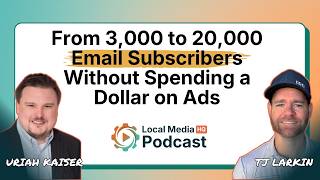
16 years in, Potomac Local runs on a paywall and AI
Uriah started Potomac Local News in 2010 as his old newspaper died. Now a paywall pays the bills, an email wall built the list, and AI fixed his burnout. Sixteen years of proof this works.
-
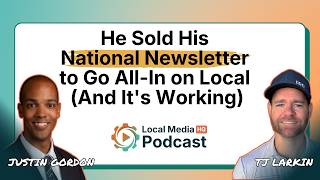
The LA Grind hit $100K in nine months with events and a $59 membership
Justin quit a venture firm job for newsletters. Nine months into the LA Grind: $100K+ in revenue, 70 paying members, and a 250-person sponsored event. Speed like that is a choices story, not a luck story.
-

Nearly 5,000 subscribers, zero ad spend, and one Reddit alert app
Michelle grew What's Weird ATX to nearly 5,000 subscribers with zero paid ads—real Reddit comments, plus an iOS app she built to find the right threads. Scrappy and repeatable.
-

His newsletter launched a real estate company
Tad turned NWA Daily's 41,500 subscribers into a brokerage stake, a $30,000 bank exclusive, a dine card, and an agency. The newsletter is the front door; the business is everything behind it.
Me on other people's shows
Sometimes I sit on the other side of the mic.
- How to Build a Profitable Local Newsletter — LetterStack,
- Building a Hyper Local Newsletter Empire — Diary of a Franchise,